


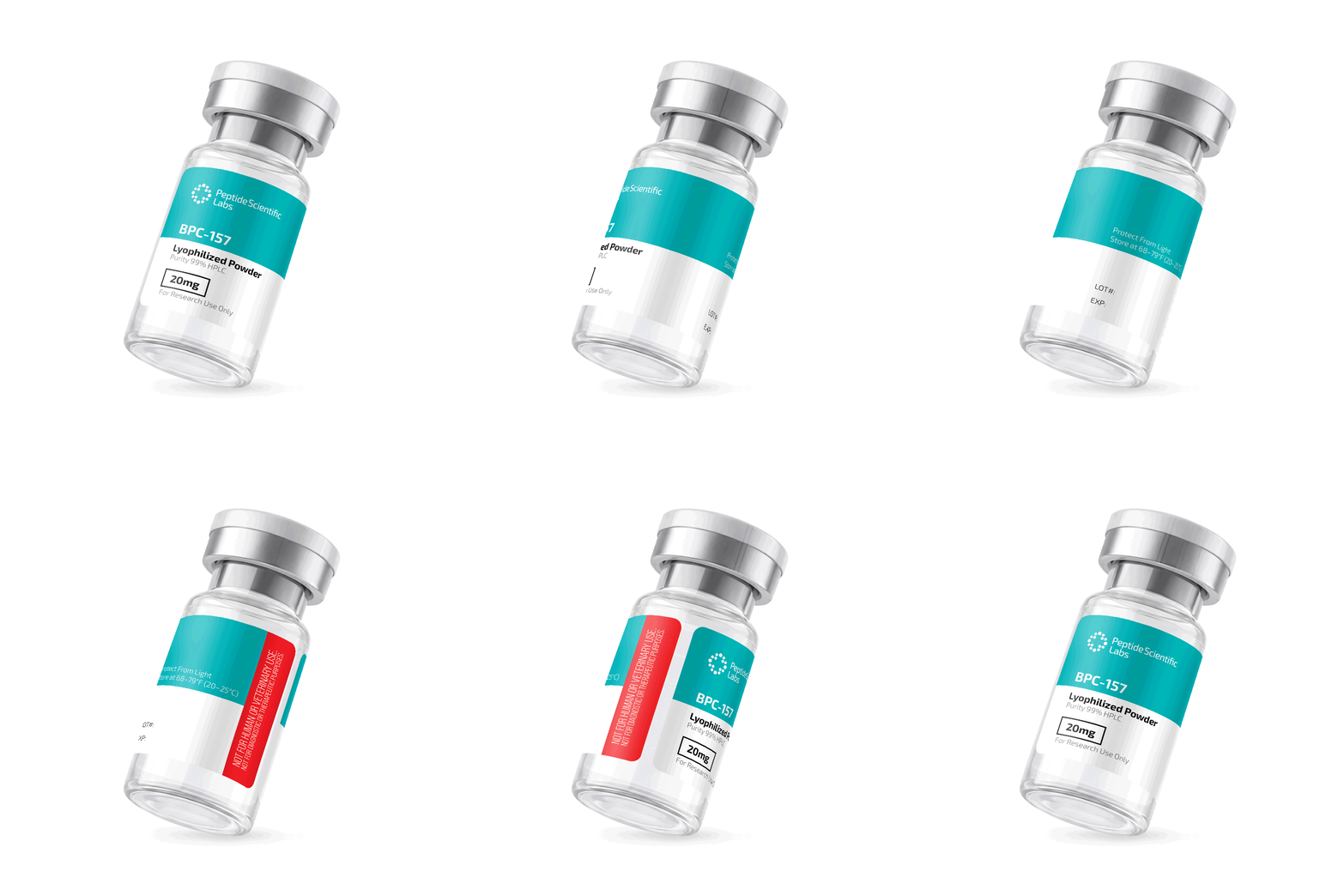


BPC-157 20mg Peptides
Confidence in every measurement starts with the integrity of the peptide.
This BPC-157 lyophilized peptide vial is a clean, single-ingredient format designed for laboratory use. Presented as an unflavored, neutral lyophilized powder, it delivers a total strength of 20mg per vial. The active ingredient is a pentadecapeptide, selected for research settings that require precise handling, consistent performance, and reproducible results.
- Each vial contains 20mg of BPC-157 (Body Protection Compound 157), a pentadecapeptide widely studied for its stability and utility in controlled peptide research, including investigations of cell signaling, tissue models, and angiogenic pathways. Researchers value its compatibility with rigorous protocols and assay development, supporting reliable data generation when used within validated laboratory methods.
Formulated as a lyophilized cake to preserve integrity, this vial is suited to careful reconstitution under sterile technique according to laboratory SOPs. The format supports accurate aliquoting, clear documentation, and repeatable preparation, helping maintain consistency across time points and teams. The single-vial 20mg presentation streamlines inventory and lot-to-lot comparison while minimizing variability from multi-source materials.
Each unit is prepared with attention to moisture and light protection to help maintain peptide stability until use. Researchers can expect a clean, straightforward material experience that aligns with methodical workflows—from initial inspection and recordkeeping to solution preparation and downstream application. There are no flavors, dyes, or unnecessary additives, aligning the product with research environments where composition transparency and simple matrices are essential.
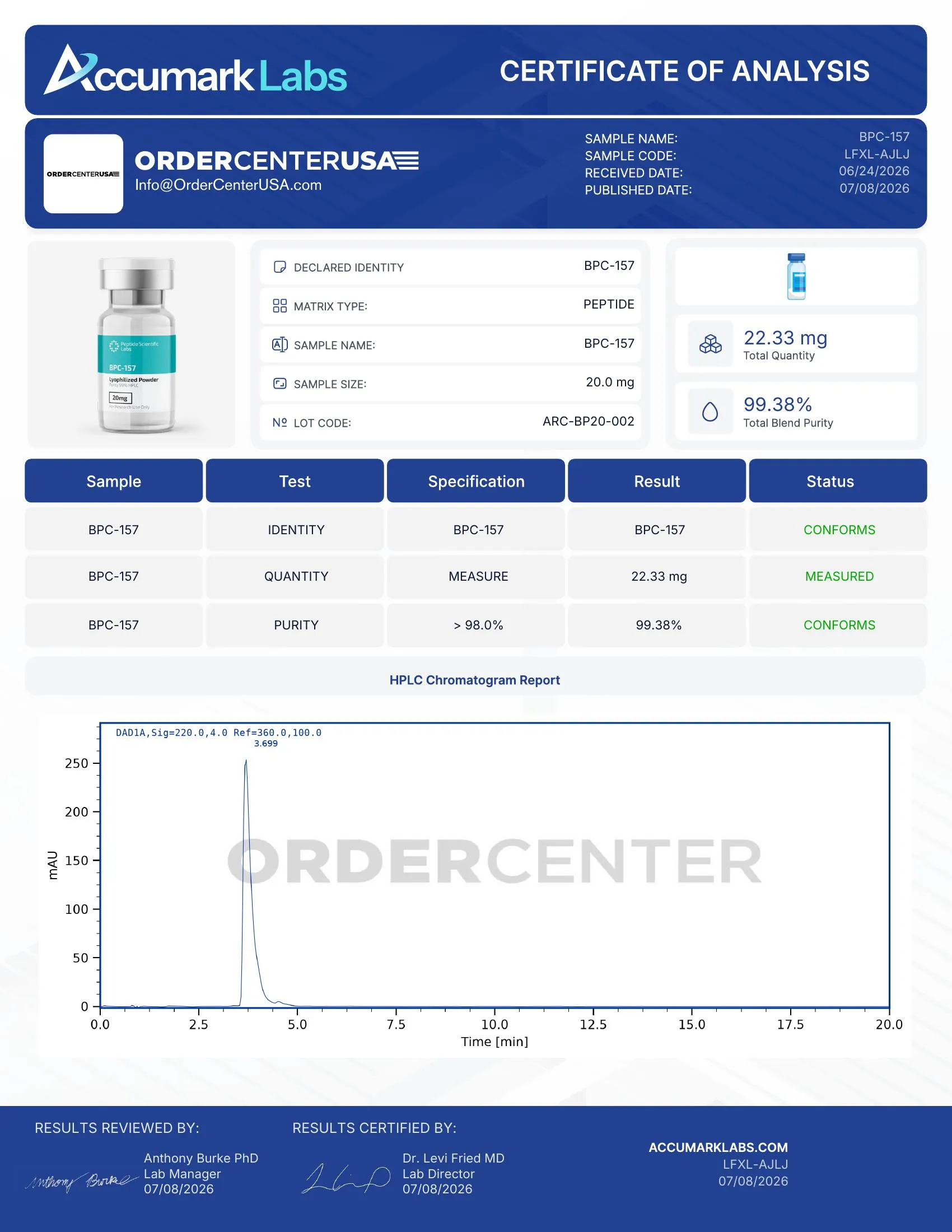
Peptide Scientific Labs operates with a quality-first mindset. Every lot is tested for identity and purity by advanced analytical methods (HPLC/LC-MS), with traceable lot coding and documentation support for audit readiness. Manufacturing and handling follow stringent controls in the United States, and products are packed with care to uphold consistency from our facility to your bench. A certificate of analysis is available to support method development, qualification, and internal QA requirements.
For laboratory research use only. Not for human consumption, medical use, diagnostic use, or veterinary use. Handle only by qualified personnel using appropriate laboratory protective measures and protocols.
- Most orders ship within 24 hours and arrive within 3 to 5 days of leaving our warehouse.
- Shipping is free on orders of $99+ (except Hawaii and Alaska).
- All orders ship in discreet packaging via USPS Ground Advantage mail.
Delivery restrictions vary by state.

This Product Contains

Customer Reviews
There are no reviews yet. Be the first to write a review!

Frequently Asked Questions
What is BPC-157 typically studied for?
BPC-157 is commonly studied in relation to tendon, ligament, muscle, gut, and vascular repair models. Researchers are generally interested in how it may influence angiogenic signaling, inflammatory response, and tissue recovery in preclinical systems, rather than treating it as an approved medical therapy.
What role do peptides play in tissue research?
Peptides play multiple roles in tissue research. Some act as signaling molecules studied for their effects on fibroblast activity, angiogenesis, and extracellular matrix assembly. Others are investigated as modulators of inflammatory pathways relevant to tissue damage and recovery. A third group serves as reference compounds in assay development and analytical workflows.
Because peptides can be synthesized with very precise control over sequence and purity, they are particularly useful in research models where specific molecular interactions need to be isolated and studied. This makes peptides a common and valuable tool across cell biology, regenerative research, and pharmacological investigation.
What are repair peptides?
Repair peptides is an informal research category referring to short peptides studied in the context of tissue recovery, extracellular matrix remodeling, and cellular responses to damage. Well-known examples investigated in this space include BPC-157, TB-500 (a thymosin beta-4 fragment), and KPV, each of which has been studied in different models of cellular stress, inflammation, and tissue repair.
The category groups together peptides that share a research focus rather than a strict biochemical family. All repair peptides offered by Peptide Scientific Labs are lyophilized research materials intended exclusively for in vitro investigation and are not drugs or therapeutics.
Why are repair peptides studied in recovery models?
Repair peptides are studied in recovery models because short peptides often represent active fragments of larger endogenous proteins that naturally participate in tissue maintenance. By synthesizing these fragments in isolation, researchers can study their individual contributions to processes such as cell migration, angiogenesis, collagen deposition, and inflammatory modulation under controlled conditions.
This approach allows investigators to build mechanistic hypotheses about recovery pathways without the complexity of the full-length parent protein. It also provides reference standards for analytical work. As with all categories on Peptide Scientific Labs, these materials are strictly for laboratory use.