


CJC-1295 w/o DAC + Ipamorelin + Sermorelin Research Kit — GH Secretagogue Peptides
This research kit combines three growth-hormone secretagogue research peptides — CJC-1295 w/o DAC, Ipamorelin, and Sermorelin — for laboratory research on the GH axis.
- CJC-1295 w/o DAC (10mg): a GHRH analog studied for pulsatile growth-hormone release.
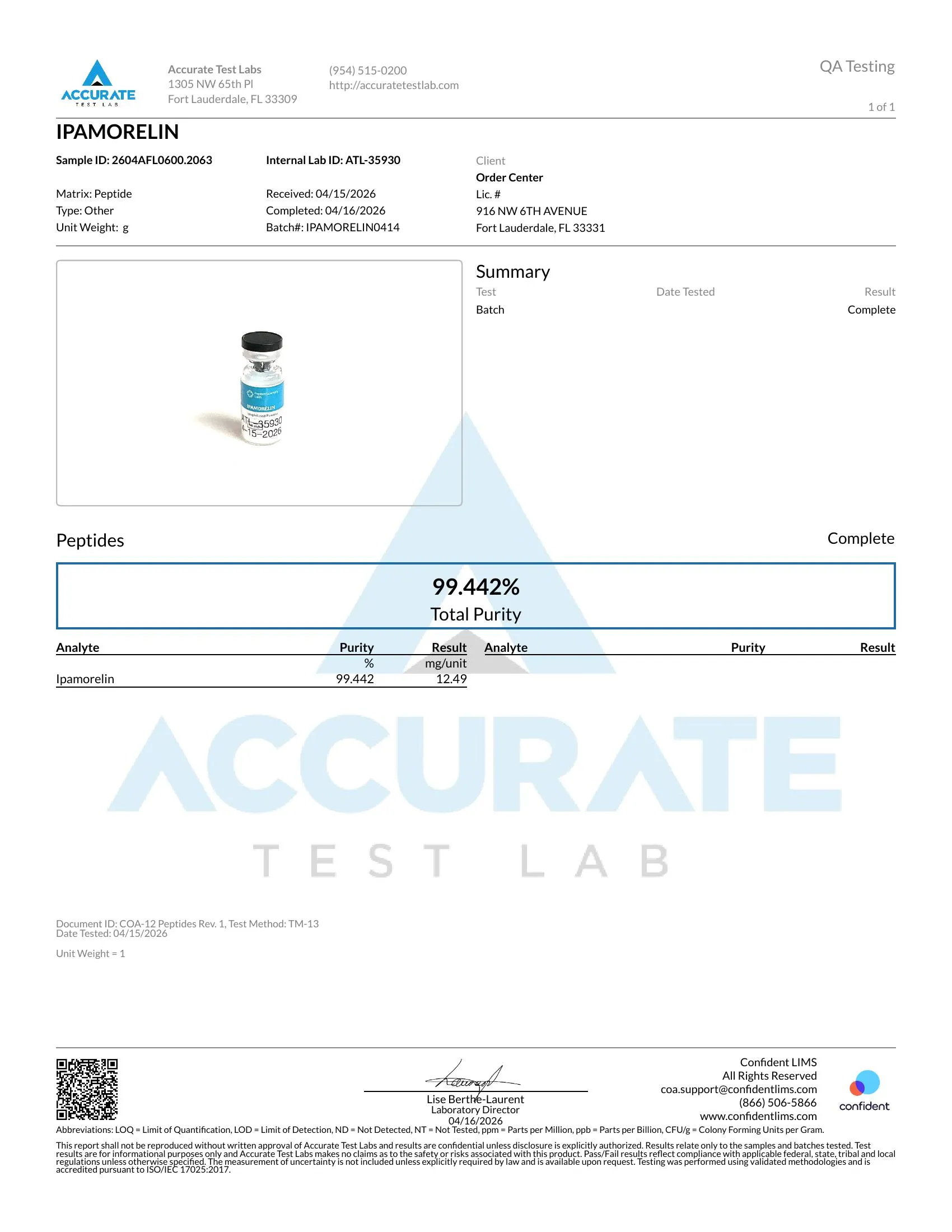
- Ipamorelin (10mg): a selective GH secretagogue / ghrelin-receptor agonist studied for GH stimulation.
- Sermorelin (10mg): a GHRH(1-29) fragment studied in growth-hormone research.
Each compound is supplied as a 10mg lyophilized vial. For laboratory and research use only. Not for human consumption.
- Most orders ship within 24 hours and arrive within 3 to 5 days of leaving our warehouse.
- Shipping is free on orders of $99+ (except Hawaii and Alaska).
- All orders ship in discreet packaging via USPS Ground Advantage mail.
Delivery restrictions vary by state.

This Product Contains


Customer Reviews
- 1
- 2
- 3
- 4
- 5

Reviews (2)


Ipamorelin 10mg Peptides
Ipamorelin 10mg Peptides
Frequently Asked Questions
What is Ipamorelin?
Ipamorelin is a growth-hormone secretagogue that acts primarily through the ghrelin receptor pathway. It is often described as more selective than older secretagogues because it is studied for GH release with less interest in off-target hormone stimulation. For product copy, it should be described as a research peptide for endocrine signaling studies.
What is Ipamorelin typically studied for?
Ipamorelin is typically studied for endogenous growth-hormone release, GH/IGF-1-axis signaling, recovery-related models, and pulse-based endocrine research. It is commonly paired with GHRH analogs in blend products because those two signaling routes are often examined together.
What is Sermorelin typically studied for?
Researchers usually study Sermorelin for pulsatile growth-hormone release, pituitary responsiveness, and downstream GH/IGF-1 signaling. A good FAQ can also explain that it is generally shorter-acting than some modified GHRH analogs, which is why it is often compared with CJC-1295-based products.
What are GH peptides?
GH peptides — short for growth-hormone-related peptides — are a research category that includes two main subgroups. The first is growth-hormone-releasing hormone (GHRH) analogs, such as Sermorelin, Tesamorelin, and CJC-1295, which are studied for their interaction with the GHRH receptor. The second is growth hormone secretagogues, such as Ipamorelin, GHRP-2, GHRP-6, and Hexarelin, which are studied for their interaction with the ghrelin receptor (GHS-R1a).
Both subgroups are investigated in the research context of growth-hormone-axis biology. All GH peptide products from Peptide Scientific Labs are lyophilized research compounds intended solely for in vitro laboratory investigation.
How do GH peptides differ from recombinant growth hormone?
Recombinant human growth hormone is the full 191-amino-acid human GH protein, produced via recombinant DNA technology. It is essentially identical to the endogenous hormone itself. GH peptides, by contrast, are much shorter sequences — typically on the order of a few to a few dozen amino acids — that do not act as GH themselves but rather engage upstream receptors (GHRH-R or GHS-R1a) involved in the GH signaling axis.
This makes the two categories mechanistically distinct. Recombinant GH is a replacement of the hormone itself, while GH peptides are research tools for studying the regulatory machinery that controls endogenous GH release.