


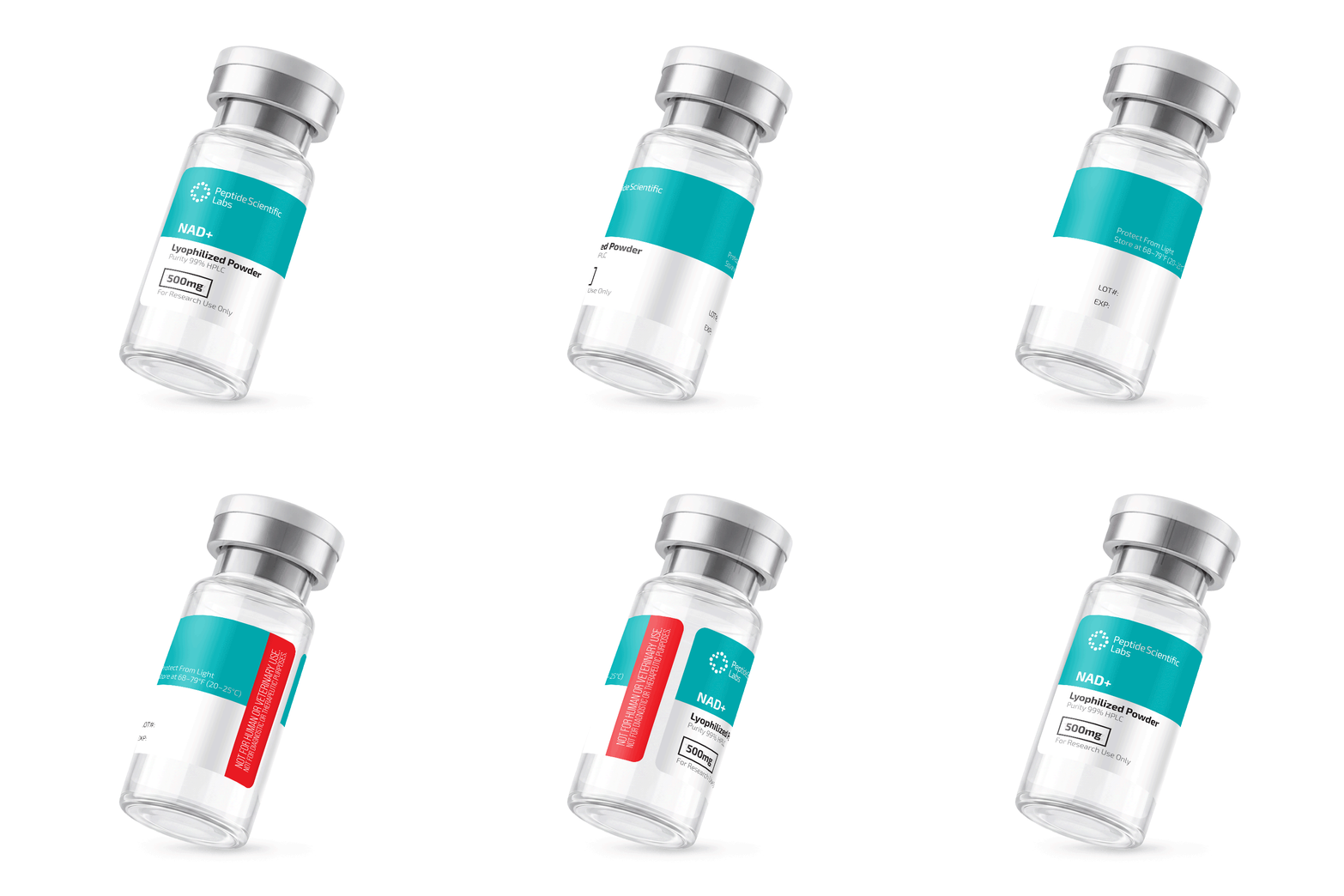


NAD+ 500mg Peptides
Built for researchers who refuse to compromise, this vial delivers dependable clarity and precision in a lab-ready format.
This NAD+ lyophilized peptide vial provides 500mg of nicotinamide adenine dinucleotide (NAD+) as a stable, freeze-dried powder designed for controlled laboratory reconstitution. Product type/format: lyophilized peptide vial. Style: unflavored, unbuffered. Active ingredient: NAD+. Total strength: 500mg. Each unit is presented for accurate preparation, measured aliquoting, and repeatable protocols across a range of in vitro and ex vivo research settings.
- Each vial contains 500mg of NAD+ (nicotinamide adenine dinucleotide), a central redox coenzyme widely investigated for roles in cellular energy metabolism, sirtuin signaling, and mitochondrial function within research models.
Developed for non-edible laboratory use, the freeze-dried matrix is engineered to reconstitute cleanly with an appropriate sterile diluent, producing a clear working solution suitable for quantitative methods. The consistent lyophilized cake supports precise weighing, careful dilution, and standardized handling from bench setup to downstream assays. With a straightforward, unflavored profile and a focus on clean reconstitution, this vial aligns with workflows that prioritize control, comparability, and low variability across experiments.
Peptide Scientific Labs is a USA-based research supplier committed to rigorous standards. Each lot is produced under controlled conditions and batch-tested for identity, purity, and concentration before release. Clear labeling, lot-level traceability, and careful packaging help protect integrity from receipt to reconstitution. Our goal is reliability that stands up to methodical scrutiny—purity you can verify, consistency you can plan around, and documentation that supports professional laboratory practice. For laboratory research use only. Not for human or veterinary use. Handle using appropriate laboratory protective measures and established aseptic technique as required by your protocols.
When your work depends on repeatable outcomes and tight tolerances, this NAD+ 500mg lyophilized vial offers a disciplined foundation for building high-quality data. From initial preparation through final readout, it is engineered to support precision without distraction, so the focus remains exactly where it belongs—on the science.

- Most orders ship within 24 hours and arrive within 3 to 5 days of leaving our warehouse.
- Shipping is free on orders of $99+ (except Hawaii and Alaska).
- All orders ship in discreet packaging via USPS Ground Advantage mail.
Delivery restrictions vary by state.

This Product Contains

Customer Reviews
- 1
- 2
- 3
- 4
- 5

Reviews (2)


NAD+ 500mg Peptides
NAD+ 500mg Peptides
Frequently Asked Questions
What is NAD+?
NAD+ is a core cellular coenzyme involved in redox reactions, mitochondrial metabolism, and several signaling enzymes such as sirtuins and PARPs. It is not a peptide, so it should not be described as one. The accurate website framing is that NAD+ is a laboratory compound studied for energy metabolism and cellular repair pathways.
What is NAD+ typically studied for?
Researchers usually study NAD+ in relation to mitochondrial function, cellular energy production, stress response, DNA-repair-related biology, and aging-associated metabolic decline. A useful FAQ should keep the wording mechanistic and research-based rather than making sweeping longevity promises.
What is the connection between peptides and mitochondrial studies?
Mitochondria encode a small number of their own peptides in addition to nuclear-encoded proteins imported into the organelle. Peptides such as MOTS-c and Humanin are examples of mitochondrial-derived peptides (MDPs) that are studied as potential intracellular signaling molecules originating from the mitochondrial genome.
Additionally, some synthetic peptides — such as SS-31 — are designed to target mitochondrial membranes and interact with components of the electron transport chain environment. Together, these research threads make peptides a significant topic in mitochondrial biology investigations.
What are longevity peptides?
Longevity peptides is a research category grouping short peptides investigated in connection with cellular aging, mitochondrial function, telomere biology, and age-related changes in tissue signaling. Well-known examples studied in this space include Epitalon, MOTS-c, SS-31, and Humanin.
This is a broad and active area of biogerontology research. The peptides grouped here do not share a single biochemical family but rather a shared research focus on mechanisms relevant to aging biology. All products from Peptide Scientific Labs in this category are lyophilized research materials intended solely for in vitro laboratory investigation.
How do longevity peptides relate to cellular aging research?
Cellular aging research examines processes such as mitochondrial dysfunction, telomere shortening, cellular senescence, chronic low-grade inflammation, and changes in gene expression over time. Longevity peptides enter this research as tools for probing specific pathways — for example, mitochondrial-derived peptides for mitochondrial stress responses, or pineal-associated peptides for studies of circadian and gene-expression regulation.
By using short, well-defined peptides, researchers can target individual mechanisms within the broader hallmarks-of-aging framework in a controlled manner. This makes longevity peptides useful experimental probes in mechanistic studies of biological aging.