


NAD⁺ + MOTS-C + IGF-1 LR3 Research Kit — Longevity Peptides
- Most orders ship within 24 hours and arrive within 3 to 5 days of leaving our warehouse.
- Shipping is free on orders of $99+ (except Hawaii and Alaska).
- All orders ship in discreet packaging via USPS Ground Advantage mail.
Delivery restrictions vary by state.

This Product Contains


Customer Reviews
- 1
- 2
- 3
- 4
- 5

Reviews (2)


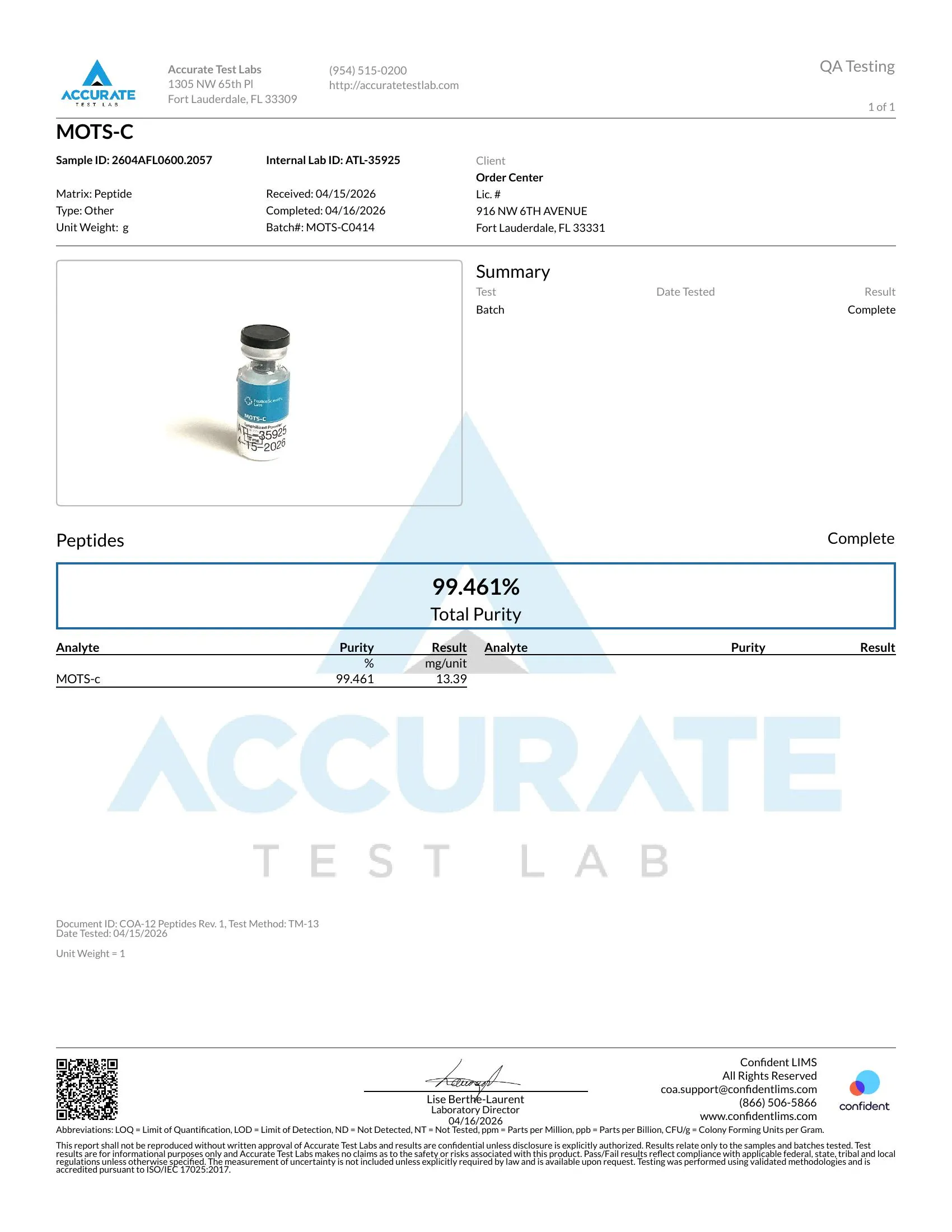
MOTS-C 10mg Peptides
MOTS-C 10mg Peptides
Frequently Asked Questions
What is IGF-1 LR3?
IGF-1 LR3 is a modified long-acting analog of insulin-like growth factor 1. It is engineered for altered binding behavior and extended activity compared with native IGF-1, which is why it is treated as a distinct research molecule. On a site like this, it should be described as a research peptide tied to growth and metabolic signaling studies.
What is IGF-1 LR3 typically studied for?
Researchers usually investigate IGF-1 LR3 for cell proliferation, anabolic signaling, glucose uptake, and tissue-growth pathways. Because it acts downstream of growth-related signaling, it should be discussed carefully and scientifically, without implying that it is an approved product for muscle gain or performance use.
What is MOTS-C?
MOTS-C is a mitochondrial-derived peptide, meaning it originates from the mitochondrial genome rather than the classic nuclear-encoded peptide families. It has become popular in metabolic and exercise-physiology research because of its link to cellular energy sensing. For a product FAQ, it should be described as a research peptide for mitochondrial and metabolic studies.
What is MOTS-C typically studied for?
MOTS-C is commonly studied in relation to metabolic flexibility, AMPK-linked signaling, insulin sensitivity, exercise adaptation, and mitochondrial stress response. The compliant way to describe it is that it is investigated in those pathways, not that it is an approved intervention for metabolic disease or performance.
What is NAD+?
NAD+ is a core cellular coenzyme involved in redox reactions, mitochondrial metabolism, and several signaling enzymes such as sirtuins and PARPs. It is not a peptide, so it should not be described as one. The accurate website framing is that NAD+ is a laboratory compound studied for energy metabolism and cellular repair pathways.