


BPC-157 + TB-500 + KPV Research Kit — Tissue Repair Peptides
This research kit brings together three widely studied regenerative research peptides — BPC-157, TB-500, and KPV — in a single set for laboratory research applications.
- BPC-157 (10mg): a synthetic pentadecapeptide investigated in tissue-repair and gastrointestinal research models.
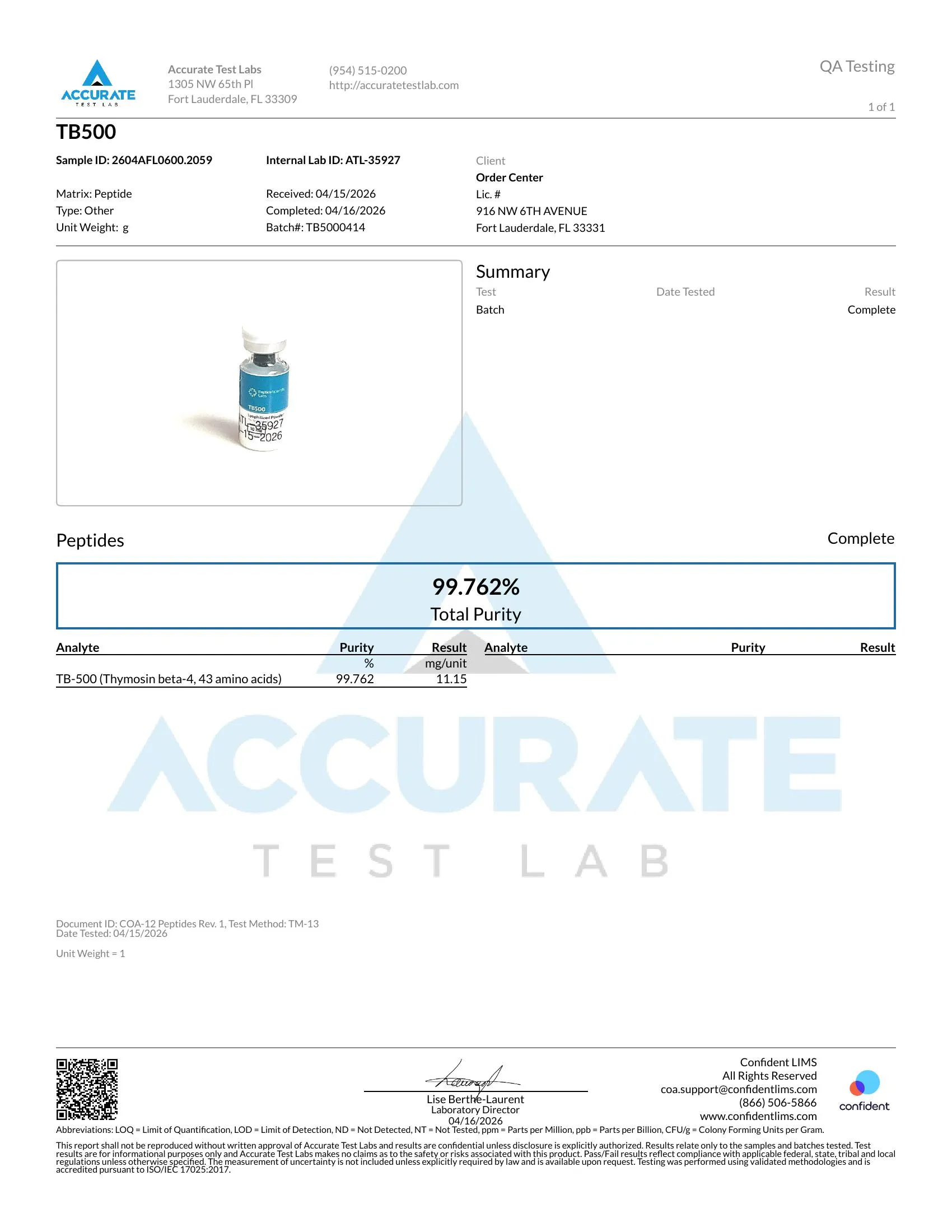
- TB-500 (10mg): a synthetic fragment of Thymosin Beta-4 studied for cell migration and extracellular-matrix remodeling.
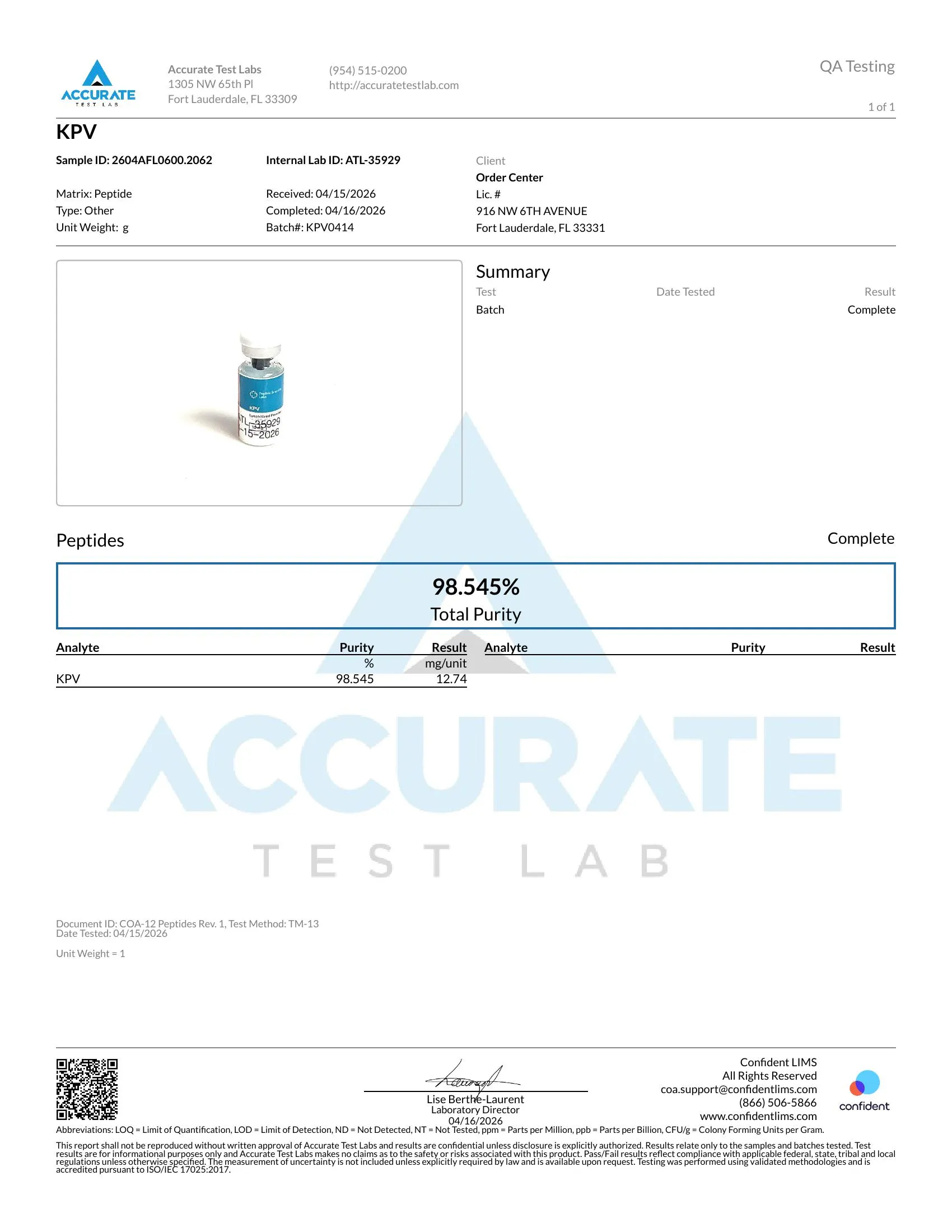
- KPV (10mg): an α-MSH-derived tripeptide examined in inflammation and host-response research.
Each compound is supplied as a 10mg lyophilized vial. For laboratory and research use only. Not for human consumption.
- Most orders ship within 24 hours and arrive within 3 to 5 days of leaving our warehouse.
- Shipping is free on orders of $99+ (except Hawaii and Alaska).
- All orders ship in discreet packaging via USPS Ground Advantage mail.
Delivery restrictions vary by state.

This Product Contains


Customer Reviews
- 1
- 2
- 3
- 4
- 5

Reviews (3)


KPV 10mg Peptides

BPC-157 10mg Peptides
BPC-157 10mg Peptides
Frequently Asked Questions
What is BPC-157 typically studied for?
BPC-157 is commonly studied in relation to tendon, ligament, muscle, gut, and vascular repair models. Researchers are generally interested in how it may influence angiogenic signaling, inflammatory response, and tissue recovery in preclinical systems, rather than treating it as an approved medical therapy.
What is KPV?
KPV is a short tripeptide derived from the C-terminal region of alpha-melanocyte-stimulating hormone. Unlike full melanocortin peptides, it is mainly discussed in the literature for anti-inflammatory and epithelial-barrier-related research. On a site page, it should be framed as a research peptide for inflammation and barrier-biology studies.
What is KPV typically studied for?
Researchers most often study KPV in models involving inflammatory signaling, intestinal or epithelial barrier function, and wound-related immune response. The accurate wording is that it is investigated for those pathways in preclinical systems, not that it is an established treatment for inflammatory disease.
What is TB-500?
TB-500 is generally described as a synthetic fragment related to thymosin beta-4 rather than the full native protein itself. It appears often in research-product catalogs because of its association with cell migration and repair-related biology. For accurate copy, it should be presented as a laboratory peptide studied in tissue-recovery models.
What is TB-500 typically studied for?
TB-500 is commonly studied for tissue remodeling, cell migration, angiogenesis, and soft-tissue recovery pathways in preclinical systems. Many researchers discuss it alongside BPC-157 because the two are often viewed as complementary in repair-oriented experimental designs.