


DSIP + SS-31 Research Kit — Restorative Recovery Peptides
- Most orders ship within 24 hours and arrive within 3 to 5 days of leaving our warehouse.
- Shipping is free on orders of $99+ (except Hawaii and Alaska).
- All orders ship in discreet packaging via USPS Ground Advantage mail.
Delivery restrictions vary by state.

This Product Contains


Customer Reviews
- 1
- 2
- 3
- 4
- 5

Reviews (1)


DSIP 10mg Peptides
Frequently Asked Questions
What is DSIP?
DSIP stands for Delta Sleep-Inducing Peptide, a small experimental peptide long discussed in neuroendocrine literature. Its mechanism has never been completely settled, which is important to say plainly. The correct framing is that DSIP remains a research peptide of interest in sleep and stress-related models, not a settled clinical product.
What is DSIP typically studied for?
Researchers usually connect DSIP with sleep architecture, circadian regulation, stress response, and neuroendocrine signaling. Because the literature is mixed, strong claims should be avoided; the most accurate wording is that DSIP is studied in those areas, with ongoing uncertainty around its precise mechanism and reproducibility.
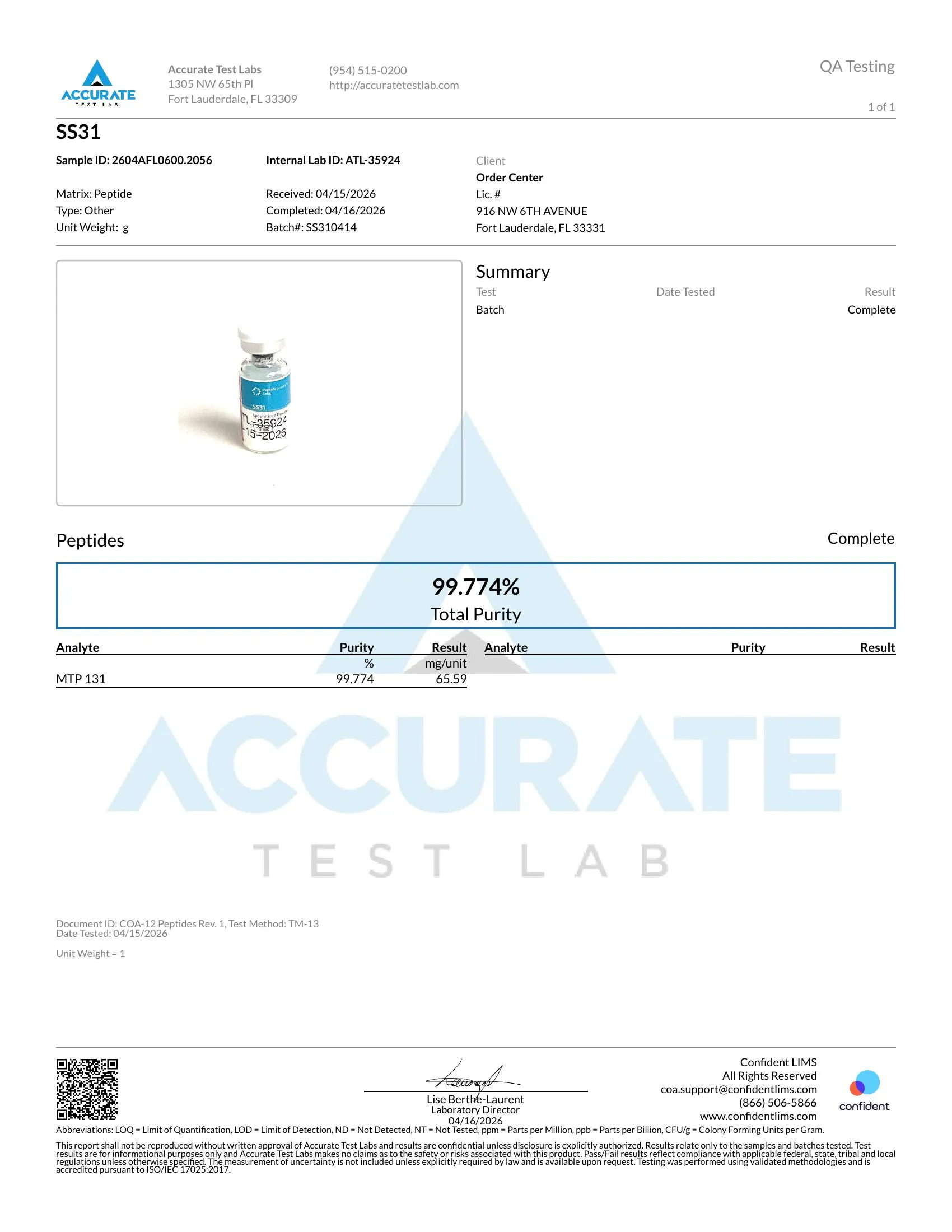
What is SS-31?
SS-31, also known in the literature as elamipretide, is a mitochondria-targeted tetrapeptide. It is notable because it is studied for interaction with cardiolipin and mitochondrial membrane function rather than for classic endocrine signaling. On a site page, it should be described as a research peptide for mitochondrial biology and bioenergetics.
What is SS-31 typically studied for?
Researchers commonly study SS-31 in relation to mitochondrial efficiency, oxidative stress, cardiolipin stabilization, muscle and cardiac bioenergetics, and age-related decline in cellular energy systems. The right tone is mechanistic and research-focused, not a blanket claim about energy or recovery.
What are neuropeptides?
Neuropeptides are short chains of amino acids produced primarily by neurons and used as signaling molecules within the nervous system. Unlike classical neurotransmitters, which are small molecules stored in synaptic vesicles, neuropeptides are synthesized as larger precursor proteins and then enzymatically processed into their active short-chain form before being released.
Examples of widely studied neuropeptides include oxytocin, vasopressin, substance P, and neuropeptide Y. They are investigated in connection with mood, stress response, memory, pain signaling, social behavior, and a wide range of other neurobiological processes in research models.